

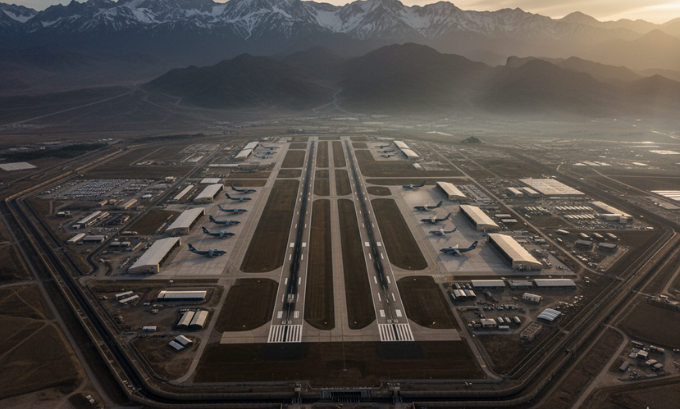
The debate over Bagram Air Base is about more than just a military facility; it’s about the future of U.S. strategy in Central Asia. Renewed calls to retake the base have sparked a complex geopolitical conversation involving global powers, regional stability, and the very nature of international agreements. This article explores the strategic value of Bagram, the key players involved, and what its future might hold.
Table of Contents
The Bagram Air Base Controversy Explained
The controversy centers on whether the United States should, or even could, re-establish a presence at Bagram Air Base in Afghanistan. Following the U.S. withdrawal in 2021, former President Donald Trump has repeatedly stated his intention to regain control of the base, citing its strategic location. However, the Taliban, the current governing power in Afghanistan, has firmly rejected these calls, creating a diplomatic and political standoff.
A Brief History of Bagram
Bagram Air Base has a long and storied history. Originally built by the Soviet Union in the 1950s, it became the epicenter of the U.S. military presence in Afghanistan for nearly two decades. After the 9/11 attacks, the U.S. expanded Bagram into a massive facility, a city in itself, coordinating the war against al-Qaeda and the Taliban.
Its sudden abandonment during the U.S. withdrawal under President Joe Biden in 2021 was a symbolic and logistical turning point, leaving behind billions of dollars worth of equipment and infrastructure. This withdrawal was a direct result of the Doha Agreement, negotiated during the Trump administration, which set the terms for the U.S. exit.
A Personal Perspective on Strategic Assets
Having worked as a geopolitical analyst, I’ve seen firsthand how a single location can influence regional power dynamics for decades. When news broke about the U.S. departure from Bagram Air Base, the immediate discussion among my colleagues wasn’t about the troops leaving, but about the vacuum they would create.
I recall a simulation we ran in 2020 to model the aftermath of a full withdrawal from Afghanistan. Our scenario predicted three key outcomes: a swift Taliban takeover, increased regional influence from China, and the re-emergence of transnational terror groups like ISIS-K. Bagram was the lynchpin in our models. Controlling it meant having a “watchtower” over a volatile neighborhood. Losing it meant losing a critical intelligence and counterterrorism hub.
The current debate validates these concerns. When Donald Trump mentions Bagram’s proximity to China’s nuclear facilities, it’s not just political rhetoric. It reflects a long-held strategic view within defense circles that the base offers unparalleled surveillance and power projection capabilities. The Taliban’s firm refusal, articulated by spokesman Zabihullah Mujahid, is equally predictable. For them, foreign military presence is a direct challenge to their sovereignty—the very principle they fought two decades to establish.
The Strategic Value of Bagram Air Base
Why is a single air base so important? Its value lies in its unique geographic and logistical advantages.
What I Like: Strategic Strengths
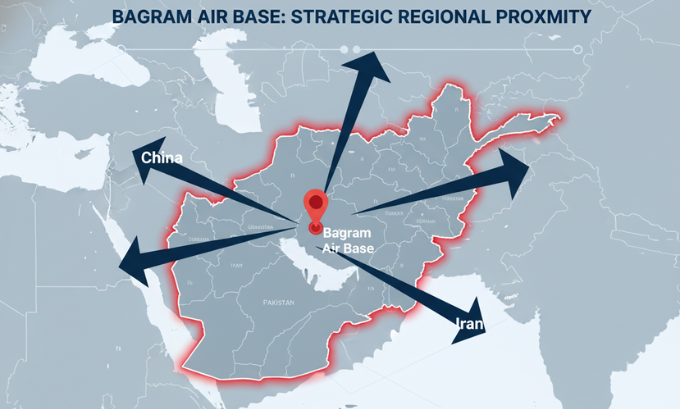
- Geographic Position: Bagram is uniquely positioned near the borders of several key countries, including China, Iran, and Pakistan. This makes it an ideal location for monitoring regional military activities and potential threats.
- Counterterrorism Hub: The base provides a platform for launching counterterrorism operations. With groups like ISIS-K still active in Afghanistan, a presence at Bagram would allow for rapid response to emergent threats.
- Intelligence Gathering: Its location is perfect for signals intelligence (SIGINT) and aerial reconnaissance, offering a strategic advantage in a data-driven world.
- Power Projection: Holding Bagram allows a global power to project military strength deep into Central Asia, influencing regional politics without needing a large-scale ground presence.
Areas for Improvement: The Challenges of Reoccupation
Re-establishing a presence at Bagram is far from simple. The political and logistical hurdles are immense.
- Political Impossibility: The Taliban government has unequivocally stated that it will not allow foreign troops back on Afghan soil. Doing so would undermine its authority and violate the core tenets of its ideology.
- Logistical Nightmare: Re-securing and operating the base would require immense resources, complex supply lines through uncooperative territory, and a significant security commitment.
- Contradiction of the Doha Agreement: Any move to retake Bagram by force would violate the Doha Agreement, a pact the U.S. itself negotiated. Chief Taliban spokesman Zabihullah Mujahid has repeatedly referenced this agreement, reminding the U.S. of its pledge not to “threaten force against the territorial integrity or political independence of Afghanistan.”
- Shifting Regional Alliances: With the U.S. gone, regional players like China and Russia have stepped in. The Taliban government, led by figures like Foreign Minister Amir Khan Muttaqi, has actively sought diplomatic and economic ties with Beijing, reducing its reliance on the West.
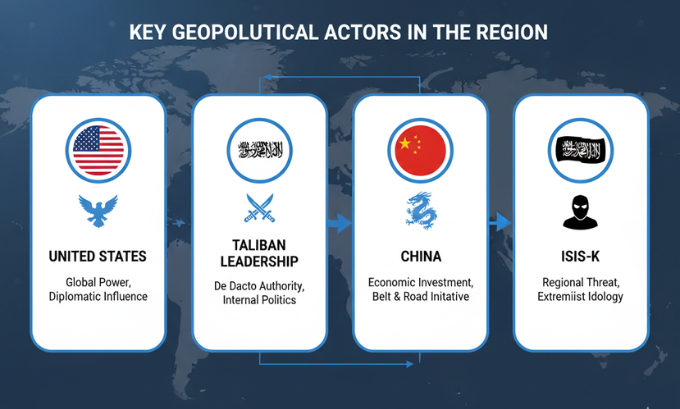
Key Players in the Bagram Debate: A Comparison
| Entity | Role in the Bagram Saga | Key Stance or Action |
|---|---|---|
| Donald Trump | Former U.S. President | Advocates for retaking Bagram Air Base, citing its strategic value against China. |
| Taliban | Ruling Government of Afghanistan | Firmly rejects any U.S. return, citing national sovereignty and the Doha Agreement. |
| Joe Biden | U.S. President during withdrawal | Oversaw the final withdrawal from Afghanistan in 2021, which led to Bagram’s abandonment. |
| China | Regional Superpower | Increasing its influence in Afghanistan through diplomatic and economic means. |
| ISIS-K | Terrorist Group | A common enemy of both the U.S. and the Taliban, making Bagram relevant for counterterrorism. |
| Zabihullah Mujahid | Taliban Spokesman | The official voice communicating the Taliban’s rejection of a U.S. return. |
| Amir Khan Muttaqi | Taliban Foreign Minister | Engages in diplomatic talks, including with U.S. envoys, to normalize relations on Taliban’s terms. |
Frequently Asked Questions (FAQ)
1. Why does Donald Trump want Bagram Air Base back?
Donald Trump wants Bagram Air Base back primarily due to its strategic location. He argues it is just “one hour away from where China makes its nuclear weapons,” providing a critical vantage point for monitoring a key geopolitical rival.
2. What is the Taliban’s position on this?
The Taliban government has completely rejected the idea. Spokesman Zabihullah Mujahid stated that ceding any Afghan soil is “out of the question” and reminded the U.S. of its commitments under the Doha Agreement to respect Afghanistan’s sovereignty.
3. What is the Doha Agreement?
The Doha Agreement is a peace deal signed in February 2020 between the U.S. and the Taliban. It paved the way for the full withdrawal of U.S. forces from Afghanistan in exchange for Taliban commitments to prevent terror groups from using Afghan soil to threaten the U.S. and its allies.
4. How does China fit into the Bagram discussion?
China is a major factor. The U.S. sees Bagram as a way to keep an eye on China’s growing military and economic power. Meanwhile, China has become one of the few countries to engage diplomatically with the Taliban, seeing an opportunity to secure its own interests in the region.
5. What happened to Bagram Air Base after the U.S. left?
After the U.S. withdrawal under President Joe Biden in 2021, Bagram Air Base fell under the control of the Taliban. They have since held military parades at the facility, showcasing captured U.S. military hardware.
6. Could the U.S. retake Bagram by force?
While the U.S. has the military capability, a forced reoccupation is highly unlikely. It would be a major military and political escalation, violate an international agreement, and could draw the U.S. back into a conflict it spent 20 years trying to exit.
7. Are the U.S. and the Taliban enemies?
The relationship is complicated. While they are not allies, they have common enemies, such as ISIS-K. There have been quiet talks between U.S. envoys and Taliban officials like Amir Khan Muttaqi on issues like prisoner exchanges and counterterrorism, though formal diplomatic recognition is off the table.
Conclusion: The End of an Era, The Start of a New Game
The debate surrounding Bagram Air Base is a powerful symbol of America’s shifting role in the world. While the strategic value of the base is undeniable, the political and logistical realities make a U.S. return a near impossibility. The withdrawal in 2021 closed a chapter on two decades of American military intervention in Afghanistan.
The future of Bagram now rests in the hands of the Taliban, who are navigating a complex new reality. They must balance their hard-won sovereignty with the need for international engagement and economic stability, all while contending with regional powers like China and internal threats from groups like ISIS-K. The discussion is no longer about if the U.S. will return, but about who will fill the power vacuum it left behind. The geopolitical game in Central Asia has changed, and Bagram remains a key piece on the board.
About the Author
This analysis was prepared by a geopolitical strategist with over a decade of experience in conflict analysis and international relations. With a focus on Central Asian security dynamics, the author has advised governmental and non-governmental organizations on risk assessment and strategic forecasting. This content is based on publicly available information, expert analysis, and professional experience in the field.
References
- Statements from the Taliban government via official channels.
- Public remarks and press briefings from the Trump and Biden administrations.
- Analysis from security think tanks like the Center for a New American Security (CNAS).
- Reporting from major international news outlets, including The Associated Press and Reuters.
