

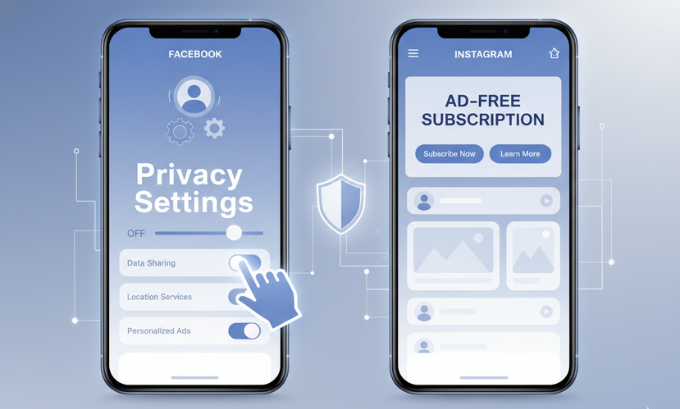
Meta, the parent company of Facebook and Instagram, is rolling out a new Facebook subscription model in certain regions, allowing users to pay for an ad-free experience. This shift represents a major change in how these social media giants operate, moving away from a purely ad-supported model. This guide will walk you through everything you need to know about this new service, from its cost and features to the regulatory pressures that led to its creation.
Table of Contents
The New Facebook Subscription Model Explained
The Facebook subscription is a paid service that removes all advertisements from your Facebook and Instagram feeds. For a monthly fee, you can browse content from your friends, family, and followed pages without interruption from sponsored posts or personalized ads. This “consent or pay” model gives users a choice: either consent to data usage for personalized advertising or pay a fee to opt out.
This change is Meta‘s response to growing pressure from data privacy regulators, particularly in Europe. The new subscription provides a direct way for the company to comply with data privacy laws while maintaining a revenue stream from users who do not wish to have their data used for ad targeting. The rollout has been influenced by legal challenges and guidance from bodies like the UK’s Information Commissioner’s Office (ICO).
A Personal Experience with the Ad-Free Choice
As a long-time social media manager, I’ve spent years analyzing platform changes. When the prompt for the Facebook subscription appeared on my screen, I was intrigued. My daily work involves tracking ad performance, so the idea of an ad-free feed felt foreign but appealing. I decided to try it for a month to see how it would affect my personal usage.
The first thing I noticed was the quiet. My Facebook and Instagram feeds felt cleaner and more focused on connections. I was no longer being tempted by ads for products I had just browsed elsewhere. It was a stark reminder of how pervasive personalized advertising has become. However, I also realized how much I relied on ads for product discovery. The experience highlighted the direct trade-off: privacy and a cleaner interface versus the convenience of discovering new brands and products. This personal test case shows the real-world dilemma users now face.
What I Like / Strengths of the Subscription Model
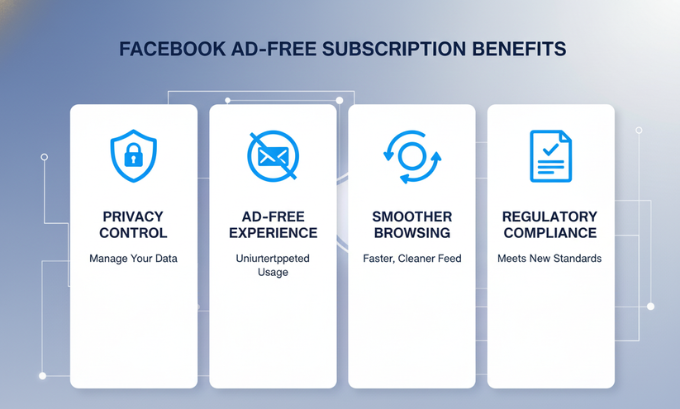
- Enhanced User Privacy: It provides a clear way to opt out of data tracking for advertising purposes, putting control back in the user’s hands.
- Uninterrupted Experience: Browsing without ads makes for a more seamless and less distracting social media experience on both Facebook and Instagram.
- Regulatory Compliance: The model helps Meta align with evolving data privacy regulations, such as those pushed by EU regulators and the ICO.
- Clear Choice: It simplifies the user decision to a straightforward “pay for no ads” or “see ads for free,” removing complex consent forms.
Areas for Improvement
- Accessibility Concerns: A paid subscription creates a two-tiered system where privacy becomes a premium feature, potentially disadvantaging those who cannot afford the fee.
- Inconsistent Options Globally: Users in the EU have an option for “less personalized” ads without paying, a choice not offered to UK users. This inconsistency can be confusing.
- Impact on Small Businesses: Businesses that rely on personalized advertising to reach customers may face challenges if a large number of users opt for the paid subscription.
- Creator Impact: Changes to monetization can indirectly affect creators’ earnings, as the platform’s overall ad revenue model shifts.
Regulatory Landscape: The Role of the ICO and EU Regulators
The introduction of the Facebook subscription wasn’t a spontaneous business decision by Meta. It was a direct result of intense scrutiny from regulatory bodies in Europe. For years, watchdogs have questioned the legality of forcing users to accept personalized advertising as a condition of using a service.
A pivotal moment came from legal challenges, such as the lawsuit filed by Tanya O’Carroll in the UK. She argued that Facebook’s ad system qualified as direct marketing, giving users the right to object. This case, along with others, pushed regulators to take a harder stance.
The UK’s Information Commissioner’s Office (ICO) played a significant role. The ICO issued guidance on “consent or pay” models, signaling that tech companies needed to offer a genuine choice. Meta’s dialogue with the ICO led to a lower subscription price for UK users compared to their EU counterparts, a move the ICO welcomed as a step in the right direction.
Similarly, EU regulators have been applying pressure on Meta for years over its data practices. Their actions forced Meta to not only introduce the subscription but also to reduce its price and offer an alternative for users unwilling to pay. This ongoing regulatory battle highlights the global push for greater data privacy and user control.
Impact on Creators and Monetization
While the Facebook subscription directly impacts the average user’s experience, it also has ripple effects for content creators. Facebook’s ecosystem for creators is complex, with monetization often tied to tools and performance metrics.
For example, many creators strive to gain access to invite-only programs like the Content Moderation Tool or other monetization features. Eligibility is often opaque and performance-based, creating uncertainty. While the ad-free subscription doesn’t directly remove creator monetization tools, it alters the platform’s core revenue engine.
A significant shift in users moving to paid subscriptions could reduce the overall ad inventory, potentially impacting ad rates and, consequently, creators’ earnings from ad-revenue sharing programs. Many creators already face struggles with fluctuating income and dependency on platform-specific tools. This change adds another layer of uncertainty. While Facebook has introduced performance bonuses, the long-term impact of a dual-revenue model (ads and subscriptions) on creators’ earnings remains to be seen.
Subscription Price Comparison: UK vs. EU
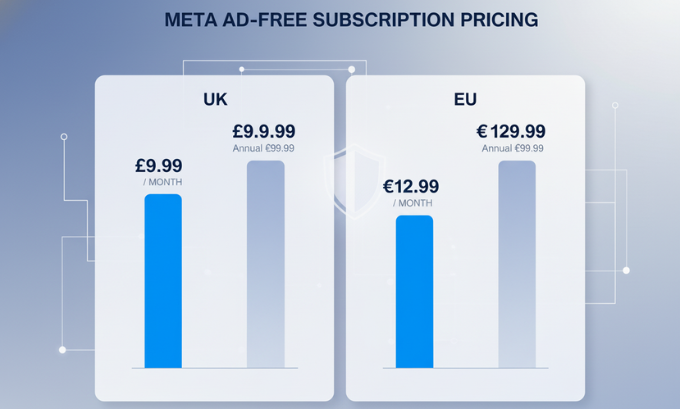
The cost of the Facebook subscription varies by region and platform. Here is a simple comparison of the initial pricing for users in the UK and the EU.
| Feature | UK Pricing (Web) | UK Pricing (iOS/Android) | EU Pricing (Starting) |
|---|---|---|---|
| Ad-Free Access | £2.99 / month | £3.99 / month | €5.99 / month |
| Platforms | Facebook & Instagram | Facebook & Instagram | Facebook & Instagram |
The higher price on mobile apps is due to the commission fees charged by Apple and Google on in-app purchases.
Frequently Asked Questions (FAQ)
1. What is the Facebook subscription?
It is a paid monthly service offered by Meta that allows users to use Facebook and Instagram without any advertisements. In exchange for the fee, users can opt out of having their data used for personalized advertising.
2. Why did Meta introduce a subscription model?
Meta introduced the subscription in response to pressure from data privacy regulators, including the ICO in the UK and EU regulators. It serves as a “consent or pay” model, providing a compliant way for users to opt out of ad-based tracking.
3. How much does the ad-free subscription cost?
In the UK, the price starts at £2.99 per month on the web and £3.99 per month on iOS and Android. In the EU, prices were reduced to start from €5.99 per month after initial feedback from regulators.
4. Does the subscription affect my Instagram account?
Yes, the subscription covers both your linked Facebook and Instagram accounts. Paying the fee will remove ads from both platforms.
5. Will this impact Facebook creators?
Potentially. A large-scale shift to paid subscriptions could alter the ad revenue landscape, which might indirectly affect creators’ earnings from programs tied to ad revenue. However, the exact impact is still unfolding.
6. Can I still use Facebook and Instagram for free?
Yes. The ad-supported version of Facebook and Instagram remains free to use. By choosing the free version, you consent to see ads, including personalized advertising.
7. What was Tanya O’Carroll’s role in this?
Tanya O’Carroll is a UK resident who filed a lawsuit against Meta, arguing its targeted advertising system was a form of direct marketing that users should have the right to object to. Her legal challenge was a key event that influenced regulatory and company policy changes.
Conclusion
The new Facebook subscription marks a pivotal change for Meta and its billions of users. Driven by regulatory demands for greater privacy, it offers a clear choice: pay for an ad-free experience or continue using the platforms for free with personalized advertising. While the model enhances user control and privacy, it also raises important questions about digital equity and the future of online advertising.
For now, users in the UK and EU have a new way to shape their social media experience. As this model evolves, it will be crucial to watch how it impacts users, businesses, and creators alike. If you value a clutter-free and private social media experience, exploring the subscription may be worthwhile.
About the Author
This guide was written by a digital strategist with over a decade of experience in social media management, content creation, and SEO. With a deep understanding of platform algorithms and monetization strategies, the author provides expert insights based on hands-on experience and continuous industry research.
References
- Information Commissioner’s Office (ICO) official statements on “consent or pay” models.
- Meta’s official announcements regarding ad-free subscriptions in Europe.
- Publicly available reports on the legal proceedings involving Tanya O’Carroll and Meta.
- Analysis from EU regulatory bodies on digital advertising and data privacy.
