


Running a small business feels like juggling while walking a tightrope—you need to keep multiple balls in the air without losing your balance. Among all these challenges, cash flow management stands out as the single most critical skill that separates thriving businesses from those that struggle to survive.
Cash flow management is the process of monitoring, analyzing, and optimizing the money flowing in and out of your business. Unlike profit, which can be theoretical, cash flow represents the actual liquidity available to pay bills, invest in growth, and weather unexpected storms. For small business owners seeking sustainable growth, mastering this discipline is non-negotiable.
If you’re looking for practical strategies and tools to transform your financial management, want to learn about how to manage cash flow in a small business, this comprehensive guide will walk you through everything you need to know. From creating accurate cash flow forecasting models to implementing inventory control systems, you’ll discover actionable techniques that successful entrepreneurs use to build resilient businesses.
Table of Contents
What is Cash Flow Management?
Cash flow management involves systematically tracking, analyzing, and optimizing the timing and amounts of money entering and leaving your business. This process ensures you maintain sufficient liquidity to meet obligations while maximizing opportunities for growth and profitability.

At its core, cash flow management distinguishes between cash inflow (revenue from sales, investments, and credit) and cash outflow (expenses like rent, inventory, salaries, and loan payments). A cash flow statement documents these movements over specific periods, providing a clear picture of your business’s financial health.
Understanding cash flow differs fundamentally from tracking profit. Profit appears on paper when you make a sale, but cash flow reflects when payment actually arrives in your account. A profitable business can fail if it lacks sufficient cash to operate, making cash flow management essential for survival and growth.
Effective cash flow management enables small businesses to predict financial shortfalls, negotiate better terms with suppliers, and identify optimal timing for investments. Companies that master these skills build sustainable competitive advantages through improved financial resilience and strategic flexibility.
The Critical Importance of Cash Flow Management for Small Businesses
Small businesses face unique cash flow challenges that larger corporations rarely encounter. Without substantial cash reserves or easy access to credit, even profitable small businesses can face closure if they cannot meet immediate financial obligations.
Predict and Prevent Financial Crises
Effective cash flow management helps identify potential cash shortages weeks or months before they become critical. This early warning system enables proactive solutions like adjusting payment terms, launching promotional campaigns to accelerate sales, or securing short-term financing.
Consider a seasonal retail business that historically experiences slow sales during certain months. By analyzing cash flow patterns, the owner can prepare by building cash reserves during peak periods, negotiating extended payment terms with suppliers, or developing alternative revenue streams to smooth out fluctuations.
Reduce Financial Stress and Enable Strategic Decision-Making
Business owners who understand their cash position make decisions from a position of strength rather than desperation. This clarity reduces stress and enables strategic thinking about growth opportunities, market expansion, and operational improvements.
When you know exactly how much cash you’ll have available in the coming weeks, you can confidently invest in marketing campaigns, hire additional staff, or upgrade equipment without jeopardizing your ability to meet existing commitments.
Build Credibility with Financial Partners
Banks, investors, and suppliers prefer working with businesses that demonstrate sophisticated financial management. Well-prepared cash flow forecasting and regular reporting build trust and improve your negotiating position for loans, investment, or favorable payment terms.
10 Proven Strategies to Master Cash Flow Management
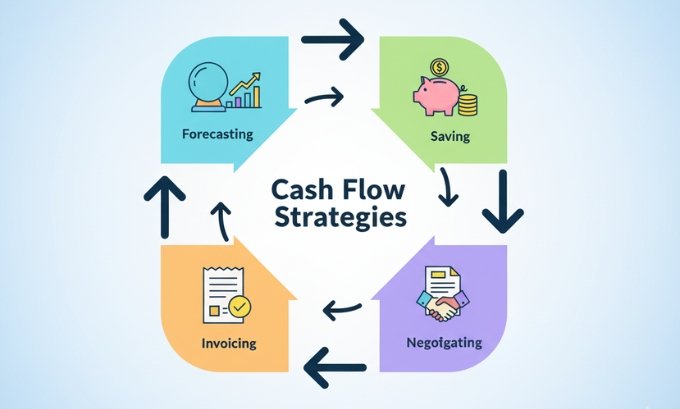
1. Create Comprehensive Cash Flow Forecasting
Cash flow forecasting forms the foundation of effective financial management. Start by projecting all expected inflows and outflows for the next 13 weeks, providing both short-term operational guidance and medium-term strategic planning capability.
Include all revenue sources, from direct sales to investment income, and account for seasonality, payment delays, and collection challenges. On the expense side, categorize fixed costs (rent, insurance, loan payments) and variable costs (inventory, marketing, temporary labor) to understand your financial flexibility.
Most successful small businesses update their forecasts weekly, comparing actual results against projections to improve accuracy over time. This iterative process helps identify patterns and improves decision-making capability. For comprehensive financial planning resources, goal-setting frameworks can provide additional structure for long-term cash flow planning.
2. Implement Strategic Inventory Control
Inventory control directly impacts cash flow by reducing the capital tied up in unsold products. Conduct regular ABC analysis to identify fast-moving items that deserve priority stocking and slow-moving inventory that may require discounting or discontinuation.

Technology solutions like warehouse management systems can automate reordering based on sales velocity and seasonality, preventing both stockouts and excess inventory. Small businesses often achieve 15-20% improvements in cash flow by optimizing their inventory management processes. A robust warehouse management software for small business is a worthwhile investment.
3. Optimize Invoice and Payment Timing
Accelerate receivables by sending invoices immediately upon delivery and offering early payment discounts. Consider requiring deposits for large orders or implementing progress billing for extended projects.
Simultaneously, strategically manage payables by taking advantage of supplier terms without damaging relationships. Pay early only when discounts exceed your cost of capital, but never pay late enough to incur penalties or damage your credit rating.
4. Develop Alternative Revenue Streams
Alternative revenue streams provide financial stability and reduce dependence on single income sources. These might include service extensions, digital products, licensing agreements, or subscription models that generate recurring revenue.
A consulting firm might develop online training courses, while a retail business could add repair or maintenance services. The key is choosing revenue streams that leverage existing capabilities and customer relationships while providing more predictable cash flow. Exploring e-commerce business ideas for beginners can also spark inspiration.
5. Build and Maintain an Emergency Fund
Establish an emergency fund equivalent to 3-6 months of operating expenses. This financial cushion enables confident decision-making during challenging periods and prevents the need for expensive emergency financing.
Start by setting aside a small percentage of monthly revenue until you reach your target. Maintain this fund in easily accessible, interest-bearing accounts that provide immediate liquidity when needed.
6. Negotiate Strategic Supplier Relationships
Strong supplier relationships provide flexibility during cash flow challenges. Communicate openly about your business needs and payment capabilities, and explore early payment discounts that provide mutual benefits.
During tight cash periods, suppliers often prefer communication and modified payment schedules over late payments or non-payment. Building these relationships before you need them creates options when challenges arise.
7. Leverage Technology for Financial Management
Modern accounting software and automation platforms transform cash flow management from a reactive process to a proactive strategic tool. Solutions like Shopify Balance, Tesorio, Jirav, and Google Sheets offer different levels of sophistication and integration capability.
For businesses starting their digital transformation journey, understanding digital transformation strategies can help identify the most valuable technology investments for long-term success.
8. Choose Leasing Over Purchasing When Strategic
Leasing equipment and technology preserves cash for operational flexibility while still providing access to necessary tools. This approach is particularly valuable for assets that depreciate quickly or require regular upgrades.
Evaluate leasing decisions based on total cost of ownership, tax implications, and impact on cash flow rather than just monthly payments.
9. Optimize Banking Relationships
High-yield business savings accounts maximize returns on surplus cash while maintaining liquidity. Research options like Shopify Balance that offer competitive rates, low minimum balances, and easy access to funds when needed.
Consider establishing banking relationships with multiple institutions to diversify risk and access different products and services as your business grows. If you’re looking for more information on financial services, exploring a company like Monarch Networth Capital might provide useful insights.
10. Implement Systematic Performance Monitoring
Regular review of actual cash flow against projections identifies trends, validates assumptions, and highlights areas requiring attention. Weekly reviews enable rapid response to changing conditions, while monthly analyses support strategic planning and goal adjustment.
Essential Cash Flow Management Tools and Platforms

Google Sheets: The Foundation Tool
Google Sheets provides an accessible starting point for businesses beginning their cash flow management journey. Create templates that track weekly cash positions, categorize income and expenses, and project future needs.
The flexibility of spreadsheets allows customization for specific business models while maintaining simplicity. Many successful businesses continue using enhanced spreadsheet models even as they grow, appreciating the control and transparency these tools provide.
Shopify Balance: Integrated Financial Management
For e-commerce entrepreneurs, Shopify Balance offers a streamlined solution. It’s a free financial account integrated directly into the Shopify admin, allowing you to manage money where you make it. Features like faster payouts and cashback on business spending can directly improve your cash position without adding complexity to your operations.
Tesorio: Advanced Integration and Analytics
Tesorio offers sophisticated cash flow dashboards that integrate with banking systems and accounting platforms. Real-time data feeds enable immediate visibility into cash positions and automated forecasting based on historical patterns.
The platform’s collaborative features support team-based financial management and provide detailed analytics for identifying optimization opportunities.
Jirav: Comprehensive Financial Management
Jirav integrates cash flow analysis with broader financial planning and performance management. The platform supports complex businesses with multiple revenue streams, departments, and geographic locations.
Advanced reporting and dashboard capabilities make financial information accessible to non-financial team members while maintaining the depth needed for sophisticated analysis.
Real-World Implementation: A Small Business Success Story
Consider Maria, who owns a specialty food import business. Initially struggling with seasonal cash flow variations and unpredictable supplier payment terms, she implemented a comprehensive cash flow management system.
Maria began by creating detailed 13-week cash flow projections, identifying that her business required an additional $50,000 in working capital during peak importing seasons. She established relationships with three different banks, securing a line of credit before she needed it.

By negotiating 60-day payment terms with major customers while maintaining 30-day terms with suppliers, Maria created a natural cash flow buffer. She also developed relationships with local restaurants, creating a secondary revenue stream through direct sales that provided more immediate cash flow.
Within 18 months, Maria’s business achieved 35% revenue growth while maintaining positive cash flow throughout seasonal cycles. The disciplined approach to financial management enabled strategic investments in new product lines and market expansion.
For entrepreneurs looking to start similar ventures, resources on starting successful businesses provide valuable foundational guidance.
Managing Cash Flow Challenges and Risk Mitigation
Common Cash Flow Obstacles
Small businesses frequently encounter predictable cash flow challenges that proper preparation can mitigate. Seasonal variations, customer payment delays, and unexpected expenses top the list of disruptions that well-managed businesses navigate successfully.
Late-paying customers represent one of the most common challenges. Implement clear payment terms, follow up systematically on overdue accounts, and consider factoring or invoice financing for businesses with extended payment cycles.
Economic downturns affect customer spending patterns and supplier pricing simultaneously. Businesses with diversified revenue streams, strong cash reserves, and flexible cost structures prove most resilient during challenging periods. For more information on business resilience, you can visit Techbullion.
Building Financial Resilience
Resilient businesses develop multiple options for addressing cash flow challenges before they become critical. This includes maintaining relationships with multiple funding sources, building supplier partnerships that provide flexibility during tight periods, and developing revenue streams with different seasonal patterns.
Regular scenario planning helps identify potential vulnerabilities and develop response strategies. Consider how your business would respond to 20%, 30%, or 50% revenue declines and what actions would preserve critical operations.
Frequently Asked Questions
What’s the difference between cash flow management and budgeting?
Budgeting focuses on planning future income and expenses, while cash flow management emphasizes the timing of actual cash receipts and payments. A budget might show profitability, but cash flow management reveals whether you’ll have money available when bills come due.
How often should I update my cash flow projections?
Update projections weekly for the next 4-6 weeks and monthly for longer periods. This frequency enables rapid response to changing conditions while maintaining strategic perspective on longer-term trends.
What’s the ideal cash reserve for a small business?
Target 3-6 months of operating expenses, though the specific amount depends on your industry’s seasonality, customer payment patterns, and business model predictability. Service businesses might need less, while retail or manufacturing businesses often require more.
Should I use software or spreadsheets for cash flow management?
Start with spreadsheets to understand your specific needs and processes. Upgrade to specialized software when manual processes become time-consuming or when you need automated integration with banking and accounting systems. Platforms like LinkLuminous can help streamline some of these digital processes.
How can I improve customer payment timing?
Offer early payment discounts, require deposits for large orders, send invoices immediately, and follow up systematically on overdue accounts. Clear payment terms and professional collection processes reduce average payment times.
What is a cash flow statement?
A cash flow statement is a financial report that details the cash generated and used by a company over a specific period. It is broken down into operating, investing, and financing activities to provide a comprehensive view of a company’s liquidity.
Taking Control of Your Financial Future
Mastering cash flow management transforms small business ownership from constant financial stress to strategic confidence. The techniques outlined in this guide—from comprehensive forecasting to strategic supplier relationships—provide practical tools for building financial resilience and enabling sustainable growth.
Success requires consistent application of these principles rather than perfection from the start. Begin with basic forecasting and gradually implement additional strategies as your capabilities develop. The businesses that invest in these fundamental skills create lasting competitive advantages through superior financial management.
The path forward starts with your next cash flow projection. Analyze your current position and begin building the financial foundation that will support your business’s growth and success. For additional insights into scaling successful businesses, explore comprehensive guides on business growth strategies that complement strong financial management.
Your financial future depends on the actions you take today. Start implementing these cash flow management strategies now and join the ranks of business owners who sleep well at night knowing their financial house is in order.
