


Introduction
Feeling stressed or stiff? Yoga poses for stress relief and flexibility can help calm your mind, reduce muscle tension, and improve overall well-being. By combining gentle asanas, mindful breathing (Pranayama), and meditation techniques like Vipassana or Zen meditation, yoga activates the Parasympathetic Nervous System (PNS) and balances your body’s stress responses.
This guide explores the science behind yoga, how it affects your biosignals and stress biomarkers, and which poses and practices offer the greatest benefits for flexibility and relaxation.
Table of Contents
How Yoga Poses Reduce Stress and Improve Flexibility
Yoga helps relieve stress by influencing both the Autonomic Nervous System (ANS) and stress-related physiological responses. Stress triggers the Sympathetic Nervous System (SNS), increasing heart rate, muscle tension, and cortisol levels. Practicing yoga shifts the balance toward the PNS, promoting relaxation, emotional regulation, and cognitive enhancement.
Key Benefits of Yoga Poses for Stress Relief and Flexibility:
- Reduces cortisol, adrenaline, and norepinephrine levels.
- Enhances Heart Rate Variability (HRV) for better stress resilience.
- Improves muscle elasticity, joint mobility, and overall flexibility.
- Modulates EEG brainwave bands, increasing alpha and theta waves linked to relaxation.
Scientific Evidence: How Yoga Influences Biosignals and Brain Regions
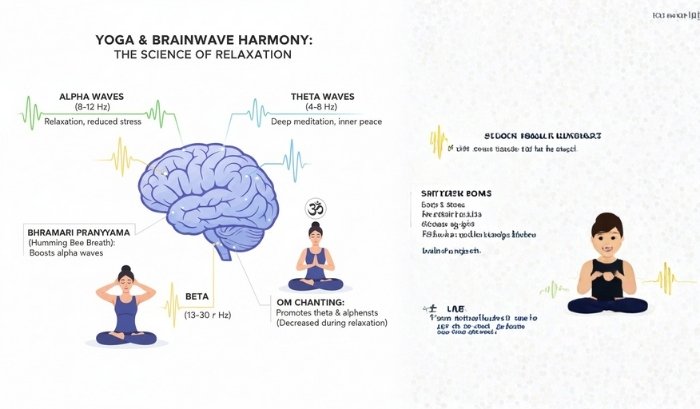
EEG Brainwave Changes
Question: How does yoga affect brain activity?
EEG studies show that yoga and meditation influence brainwaves in ways that reduce stress:
| EEG Band | Effect of Stress | Yoga Impact |
|---|---|---|
| Delta (0.1–4 Hz) | Deep sleep, cognitive overload if excessive | Reduced in mindfulness, improves awareness |
| Theta (4–8 Hz) | Cognitive effort, tension | Increases with relaxation-focused meditation |
| Alpha (8–13 Hz) | Relaxed wakefulness | Increased during OM chanting, Bhramari pranayama |
| Beta (13–30 Hz) | Active thinking, stress | Decreases after slow breathing and asanas |
| Gamma (30–50 Hz) | Cognitive integration | Enhanced in deep meditation, promotes blissful awareness |
Brain Regions:
Yoga activates the Prefrontal Cortex (PFC) for emotion regulation, reduces Amygdala overactivity (fear and stress), strengthens the Hippocampus (memory), and influences the Default Mode Network (DMN) to reduce rumination.
ECG, HRV, and Autonomic Nervous System Responses
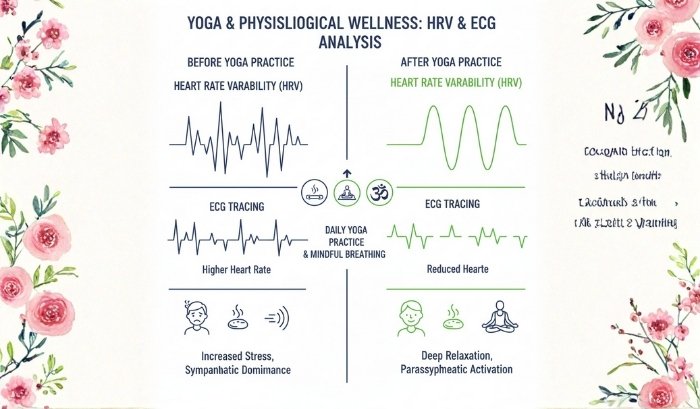
Yoga improves cardiovascular health by influencing ECG and HRV:
- HRV increases, showing stronger PNS activation and stress resilience.
- Heart rate decreases during slow-paced asanas and Pranayama.
- ECG patterns stabilize, reducing arrhythmias linked to chronic stress.
Example: A study of Tai Chi and Hatha yoga practitioners showed significant increases in HRV and reduced SNS activity after 8 weeks.
Galvanic Skin Response (GSR) and Muscle Relaxation
GSR measures skin conductance, reflecting SNS activity. Yoga techniques like Sudarshan Kriya and Bhramari Pranayama reduce GSR, indicating lower stress.
EMG studies show that yoga decreases muscle tension, especially in the shoulders and back, improving both relaxation and flexibility.
fMRI Findings: Neural Mechanisms of Stress Reduction
Functional MRI studies reveal that yoga:
- Enhances connectivity in the PFC, supporting better emotional control.
- Reduces hyperactivity in the Amygdala, lowering anxiety responses.
- Modulates hippocampal volume, improving memory and resilience.
Use Case: Participants practicing OM chanting and Pranakarshan Pranayama showed reduced amygdala activity and increased DMN connectivity, reflecting decreased stress and improved mindfulness.
Popular Yoga Practices for Stress Relief and Flexibility
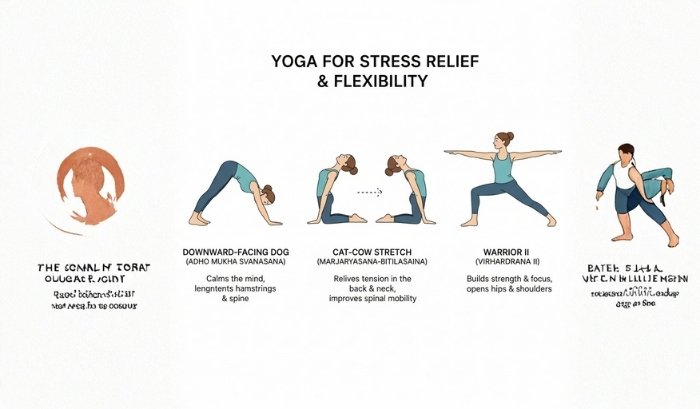
Asana (Physical Postures)
- Downward Dog: Stretches hamstrings, spine, and shoulders; relieves tension.
- Cat-Cow: Improves spinal flexibility; reduces lower back stress.
- Warrior II: Opens hips and chest; enhances strength and focus.
Pranayama (Breathing Techniques)
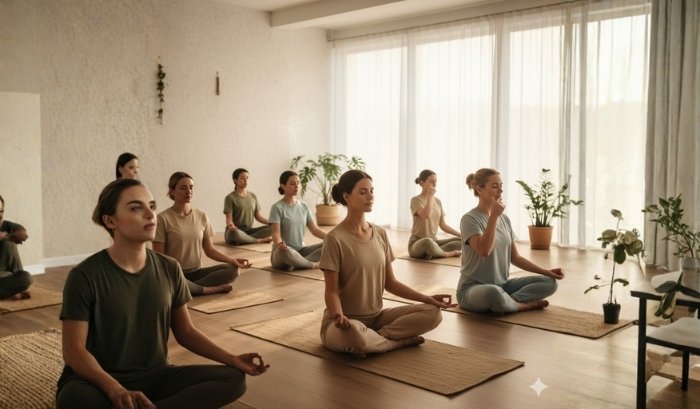
- Alternate Nostril Breathing: Balances PNS and SNS; improves HRV.
- Bhramari Pranayama: Calms the mind; increases alpha and gamma waves.
- Sudarshan Kriya: Regulates cortisol; boosts emotional regulation.
Meditation Practices
- Vipassana: Increases theta activity; supports mindfulness and emotional stability.
- Zen Meditation: Strengthens attention networks; reduces beta wave stress activity.
- OM Chanting: Enhances alpha power; promotes deep relaxation.
Integrated Yoga Programs
- Hatha Yoga: Combines gentle asanas and breathing; improves flexibility and reduces cortisol.
- Tai Chi: Slow, flowing movements; enhances HRV and reduces muscle tension.
If you want to learn more about mental health and yoga , you can visit trusted sources like MumbaiTimes.net, gogonihon.jp.net and ponta.in for in-depth insights and updates.
Real-Life Experience: Stress Relief Through Yoga
Scenario 1: A corporate employee practicing daily 20-minute Sudarshan Kriya reported reduced neck tension, lower resting heart rate, and improved focus at work.
Scenario 2: A middle-aged woman with chronic anxiety practiced Hatha yoga for 12 weeks, showing decreased cortisol levels and improved GSR measurements, reflecting stress reduction.
Scenario 3: College students using OM chanting and Bhramari Pranayama during exams reported lower anxiety and better HRV scores.
Strengths of Yoga for Stress and Flexibility
- Scientifically validated through biosignal analysis (EEG, ECG, GSR, EMG, fMRI).
- Accessible and low-cost intervention.
- Integrates mindfulness, physical activity, and breathing for holistic benefits.
- Improves muscle flexibility, posture, and mental focus.
Areas for Improvement
- Individual results may vary based on age, health status, and consistency.
- Proper guidance is required to avoid injury in certain asanas.
- Long-term benefits require sustained practice.
- Some techniques like Sudarshan Kriya may not suit individuals with respiratory conditions.
Comparison Table: Yoga Techniques and Their Effects
| Yoga Practice | Stress Biomarkers | Biosignals | Benefits |
|---|---|---|---|
| Sudarshan Kriya | Cortisol ↓, Adrenaline ↓ | EEG ↑ Alpha, GSR ↓ | Relaxation, emotional regulation |
| Bhramari Pranayama | Norepinephrine ↓ | EEG ↑ Theta & Gamma | Calm mind, enhanced focus |
| Hatha Yoga | Cortisol ↓ | HRV ↑, ECG stabilized | Flexibility, reduced muscle tension |
| OM Chanting | Cortisol ↓ | EEG ↑ Alpha, fMRI PFC activation | Mindfulness, stress reduction |
| Vipassana | Cortisol ↓ | EEG ↑ Theta, Delta | Emotional regulation, cognitive enhancement |
FAQ: Yoga Poses for Stress Relief and Flexibility
Q1: How quickly can I see stress reduction from yoga?
A: Many people notice immediate relaxation after a single session of Pranayama or OM chanting, while consistent practice over 4–8 weeks improves HRV, cortisol levels, and flexibility.
Q2: Which yoga pose is best for neck and shoulder tension?
A: Cat-Cow and Child’s Pose effectively reduce muscle tension while improving spinal flexibility.
Q3: Can meditation alone reduce stress without physical yoga?
A: Yes, Vipassana or Zen meditation can decrease EEG beta activity and lower cortisol, but combining with asanas and pranayama enhances flexibility and overall well-being.
Q4: Is yoga safe for beginners with high stress?
A: Yes, gentle forms like Hatha yoga or Tai Chi are safe. Avoid intense postures until guidance from an experienced instructor.
Q5: How does yoga influence heart health under stress?
A: Yoga improves HRV, reduces SNS activity, stabilizes ECG patterns, and lowers heart rate, which collectively support cardiovascular resilience.
Q6: What are the best breathing techniques for anxiety?
A: Bhramari Pranayama, Alternate Nostril Breathing, and Sudarshan Kriya are proven to reduce adrenaline and norepinephrine, calming the nervous system.
Q7: How does yoga affect brain regions?
A: Yoga increases PFC activation, reduces Amygdala hyperactivity, strengthens the Hippocampus, and modulates the DMN, improving mindfulness and emotional regulation.
If you’re looking for professional web development, SEO services, digital marketing, content marketing, link building, or guest posting, please visit or contact LinkLuminous.com. And if you want to purchase high-quality products online, check out TokyoMart.store for great deals and a wide selection.
Conclusion
Yoga poses for stress relief and flexibility offer a scientifically backed, holistic approach to improving mental and physical health. By influencing biosignals, reducing stress biomarkers, and modulating brain regions like the PFC and Amygdala, yoga helps cultivate a relaxation response, enhances flexibility, and strengthens cognitive and emotional resilience.
Call to Action: Start integrating gentle asanas, pranayama, and mindfulness meditation into your daily routine. Even 15–20 minutes a day can reduce stress, enhance flexibility, and improve overall wellness.
Author Bio
Dr. Aayushi Khajuria, PhD
Yoga and neuroscience researcher with expertise in stress reduction, mind-body interventions, and cognitive enhancement. Supported by the Department of Science and Technology (DST), Government of India, Dr. Khajuria has conducted multiple studies integrating EEG, fMRI, HRV, and GSR to explore yoga’s effects on mental health and physiological well-being.
References
- Brown RP, Gerbarg PL. Sudarshan kriya yogic breathing in the treatment of stress, anxiety, and depression. J Altern Complement Med. 2005;11:189–201.
- Streeter CC, Whitfield TH, Owen L, et al. Effects of yoga versus walking on mood, anxiety, and brain GABA levels: A randomized controlled MRS study. J Altern Complement Med. 2010;16:1145–52.
- Hartfiel N, Burton C, Rycroft-Malone J, et
